A Rainy-Day Window Walk Through the City
A rainy-day window walk turns a wet afternoon into close city observation, helping you notice shifts in movement, light and street activity without rushing to explain them.
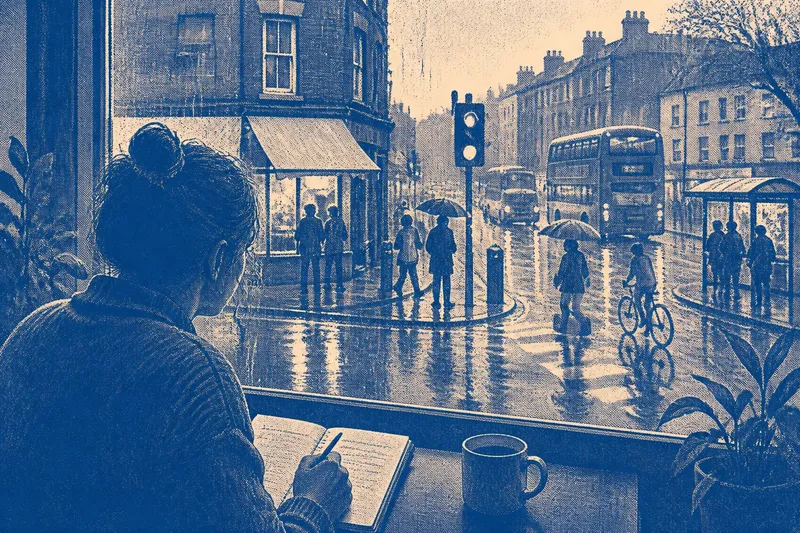
The usual rainy-day mistake is to glance through the glass, decide the street looks miserable and turn away. A rainy-day window walk asks for something slower: choose one city view and stay with it long enough to notice what changes. You need no special kit beyond a window, a little time and somewhere to jot a few words.
The point is not to decode the neighbourhood or guess what strangers are thinking. It is to watch movement, light and activity arrive in sequence, before an early explanation flattens the scene. Think of the window as a small, sheltered route through a city afternoon.
Which window gives you a useful view?
Choose a window you can sit or stand beside comfortably, with a clear view of a patch of public street. A kitchen window might frame a crossing, a shopfront, a bus stop or the entrance to a station. A library or café window can work too, provided you are allowed to remain there and can look out without blocking other people.
A broad panorama is not essential. A modest view often makes the exercise easier: one stretch of pavement, a corner and part of the road provide plenty to follow. Look for a few distinct features within the same frame, such as a signal, a shelter, a tree canopy or a bright shop awning. These give your eye stable points to return to as the rain alters the scene.
Settle where you will not have to lean over a sill or crane your neck. Keep the view to public space; do not focus on private interiors or try to identify people. If the window is fogged, choose a clear pane rather than wiping away condensation in a way that could damage the glass.
What should you get ready?
Keep the arrangement plain. A notebook and pencil are handy, but notes on a phone are fine if the screen will not pull you away from the view. A warm drink can help you linger; it is not part of the observation, so put it down between notes.
Before you begin, make a small record of the conditions. Write the place or a private description of it, the broad time of day, whether the rain is light or heavy, and what the pavement looks like. Avoid recording names, faces, number plates or details that could identify someone. The aim is a note about a street, not a dossier on its passers-by.
Leave the camera alone at first. A photograph can freeze one instant, but this walk is about changes between instants. If you decide to take a picture later, keep it pointed at the general street scene and respect privacy.
How do you begin watching without rushing?
Start with a quiet inventory. Describe what is already in view in plain, visible terms: rain streaking the glass, a red sign, a wet crossing, two buses at the kerb. Avoid words that assign a mood or motive. “A person waits under an umbrella” records what you can see; “a person is impatient” adds a story.
Then let your gaze rest on one feature at a time. Follow the edge of the pavement, the reflection of a shop window or the movement of traffic through a junction. You do not need to watch continuously. Let your eyes move away, then return to the same point and notice what has altered.
Imagine you are looking at a corner where a takeaway door opens onto a narrow pavement. You might first note a queue tucked beneath an awning, then later see the queue thin while water gathers near the kerb. Those observations do not explain why the change happened. They simply give you a more exact record of the afternoon.
Which changes are worth noting?
Use three simple threads: movement, light and street activity. They overlap, but separating them in your notes helps prevent one dramatic detail from taking over the whole view.
- Movement: Note where people, cycles and vehicles enter, pause, cross or leave. Watch for altered paths around puddles, umbrellas or a crowded shelter.
- Light: Look at reflections, glare, shadows beneath awnings and the way colours appear on wet surfaces. Record a change you can see, not what you think the weather is doing elsewhere.
- Street activity: Notice doors opening, deliveries arriving, a bus stop filling or a pavement clearing. Describe the action without guessing at its cause.
Short notes are enough: “two cyclists wait at the line”, “shop lights show in the pavement”, or “the shelter is less crowded”. If you find yourself writing “because”, pause. A reason may be plausible, but the view alone may not tell you whether it is right.
How long should a rainy-day window walk last?
Stay until you have noticed a few shifts, rather than setting a target based on the weather or how busy the street ought to be. A quiet afternoon can be informative too. The changing interval may be subtle: a cloud passing, a bus drawing away, or the thin stream of people from a nearby doorway easing.
Every so often, look away from the window for a moment. This gives your eyes a rest and makes it easier to spot a fresh change when you return. If condensation blurs the view, move to a clearer part of the window or stop; there is no need to keep watching through a distorted pane.
Say you notice a line of umbrellas moving towards a crossing, then a pause as the signal changes, then a scattering along two pavements. Write each part in order. You may later wonder whether a bus or a shop opening drew people there, but leave that question separate from what you saw.
What questions help you keep the notes observational?
What changed since I last looked?
Compare the scene with your previous note: has a vehicle left, a path cleared or a reflection shifted? Naming the difference keeps attention on the view rather than on a broad judgement about the whole street.
Where did movement pause?
Note the visible place where people or vehicles slowed, waited or changed direction. Describe the location, such as the kerb, doorway or shelter, without assuming why anyone stopped.
What did the rain make easier to see?
Wet surfaces can make lamps, signs and windows appear in reflections, while rainfall may soften distant detail. Record the particular effect in your frame rather than treating all rainy streets as alike.
What am I guessing rather than seeing?
Mark interpretations with a question mark or leave them out of the observation notes. Keeping the distinction clear lets you return to the scene later without mistaking a hunch for something visible.
How should you close the walk?
Finish with a final scan of the same view. Note what is still present, what has disappeared and what has entered the frame. Then write one sentence that describes the sequence, using only details already in your notes. For instance: “The pavement filled near the bus stop, thinned after the bus left, and bright reflections remained by the crossing.”
Put the notebook away before deciding what the scene means. You may eventually connect a pattern to the location, but this exercise does not require a verdict. Its value is in noticing that a city street is not a still picture: traffic, weather, doors and people keep changing its composition.
For your next rainy-day window walk, choose a different kind of view—a sheltered corner instead of a crossing, or a street with shopfronts rather than a bus stop. Keep the same patient attention, and let the new frame set its own pace.